

 0
0 0
0
Every year, thousands of people participate in self-defense workshops, corporate safety seminars and weekend training programs. They attend with a genuine desire to become safer and more confident. For a few hours, they learn escapes, strikes and defensive techniques—and often leave feeling empowered.
But there is an important question we rarely ask: How much of that training remains when the workshop is over?
Personal safety cannot be reduced to a certificate, a two-hour seminar or a collection of techniques. In a real emergency, fear, adrenaline, fatigue and confusion can dramatically affect our ability to remember and execute complicated movements. If self-defense is to provide meaningful protection, the way we train for it must evolve.
The Three Gaps in Conventional Self-Defense
1. The Memory Gap
Self-defense is not simply intellectual knowledge. Under stress, people do not necessarily perform what they have merely been shown; they tend to fall back on what they have repeatedly practiced. A short workshop can create awareness, but developing dependable physical responses requires progressive and consistent training.
2. The Fitness Gap
Technique cannot operate independently of the body. Strength, stamina, mobility, balance, coordination and the ability to move under fatigue all contribute to functional self-defense. A person may know exactly what to do, but without the physical capacity to execute it, that knowledge can become difficult to apply when it matters most.
This is why modern self-defense should not separate combat skills from physical conditioning. Fitness is not an optional addition to self-defense—it is part of the foundation.
3. The Complexity Gap
Real-world situations are unpredictable. There may be limited space, poor footing, multiple people, obstacles or an inability to assume an ideal position. Systems that depend on lengthy sequences or perfect execution can become difficult to apply under pressure.
The answer is not necessarily to learn more techniques. It may be to learn fewer, simpler and more adaptable principles, and then practice them consistently.
From Techniques to Readiness
A more practical model of personal safety combines three elements: awareness, physical readiness and adaptability.
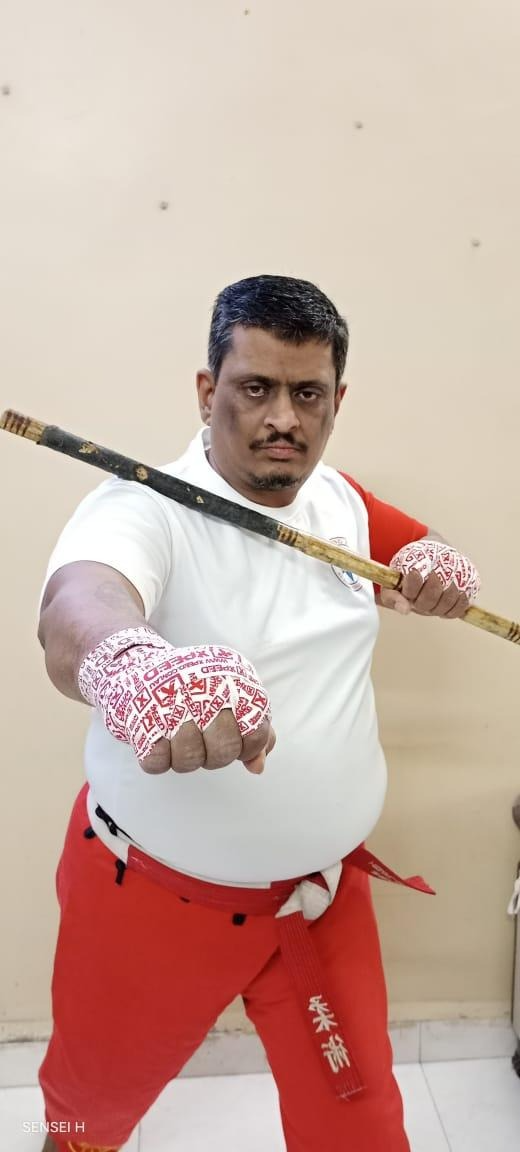
This is where the philosophy of “Hazir So Hathiyar” — be ready, so is your weapon — offers an important perspective. The idea is to recognize that personal protection does not always begin with a traditional martial arts weapon. The environment itself may contain objects that can help create distance, disrupt an attack or provide an opportunity to escape.
An umbrella, a bag, a sturdy bottle, a book or another everyday object can potentially become part of a defensive strategy when understood within a responsible, safety-focused framework.
The objective is not to encourage confrontation. It is to give ordinary people more options when faced with an extraordinary situation.
A New Standard for Personal Safety
Modern self-defense should move beyond the idea of a one-time event. It should become a progressive practice that develops physical capability, situational awareness, simple defensive responses and the confidence to make better decisions under pressure.
The goal is not to turn everyone into a fighter.
The goal is to help people become harder to intimidate, better prepared to respond and more capable of getting themselves and others to safety.
True self-defense is not about memorizing dozens of techniques. It is about developing a body that is ready, a mind that can adapt and the ability to use the resources available when it matters most.
Self-defense should not end when the seminar ends. It should begin there.
Visit: HEMAAL SHAH (@fightingfitindia) • Instagram photos and videos