

 0
0 0
0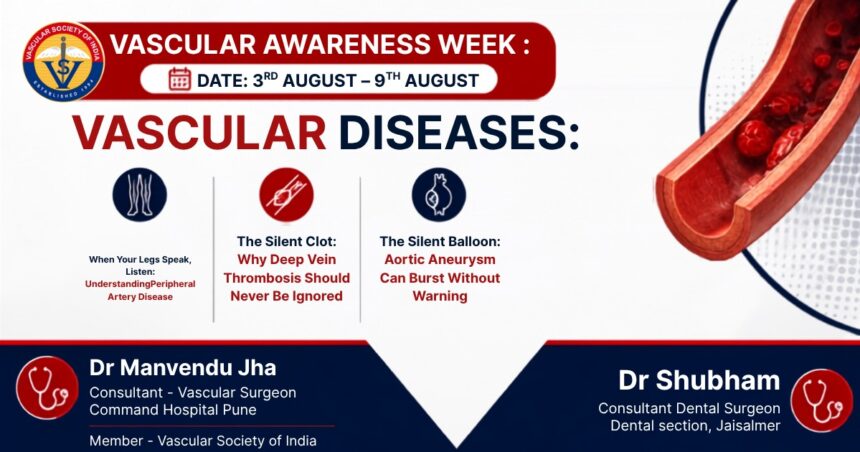
When Your Legs Speak, Listen: Understanding Peripheral Artery Disease
Walking is something most of us take for granted—until every step begins to hurt. A cramp in the calf while climbing stairs, a persistent ache after a short walk, or a wound on the foot that refuses to heal may seem like signs of aging or overexertion. In reality, these symptoms could be warning bells for Peripheral Artery Disease (PAD), a common yet under-recognized vascular disorder.
PAD develops when fatty deposits build up inside the arteries supplying the legs, reducing blood flow. Less blood means less oxygen reaches the muscles, causing pain while walking. This symptom, called intermittent claudication, often improves with rest but should never be ignored.
As the disease progresses, patients may develop pain even at rest, slow-healing wounds, cold feet, skin discoloration, or gangrene. Smoking, diabetes, hypertension, high cholesterol, obesity, kidney disease, and increasing age are major risk factors. Importantly, PAD is not just a disease of the legs—it is a warning sign of widespread atherosclerosis and significantly increases the risk of heart attack and stroke.
Early diagnosis using clinical examination, the Ankle-Brachial Index, and Doppler ultrasound allows timely treatment. Lifestyle modification remains the foundation of care: stop smoking, walk regularly, maintain a healthy diet, and control diabetes, blood pressure, and cholesterol. Medications, angioplasty, stenting, or bypass surgery may be needed in advanced cases.
Never ignore persistent leg pain. Your legs may be giving you the earliest warning about your cardiovascular health. Seeking timely medical attention can preserve mobility, prevent limb loss, and save lives.
The Silent Clot: Why Deep Vein Thrombosis Should Never Be Ignored
Not every medical emergency begins with severe pain. Sometimes it begins with a swollen leg. Deep Vein Thrombosis (DVT) occurs when a blood clot forms within the deep veins, most commonly in the legs.
The greatest danger is that the clot can travel to the lungs, causing a pulmonary embolism—a potentially fatal emergency. Symptoms include swelling of one leg, calf pain, tenderness, warmth, redness, and heaviness. However, some patients remain symptom-free until complications occur.
Risk factors include prolonged immobility, surgery, trauma, pregnancy, obesity, smoking, cancer, hormonal medications, inherited clotting disorders, and advanced age. Fortunately, DVT is largely preventable. Walking during long journeys, adequate hydration, early mobilisation after surgery, and using compression stockings or anticoagulants in high-risk patients greatly reduce the risk.
Diagnosis is usually confirmed with Doppler ultrasound and blood investigations. Treatment with anticoagulant medicines prevents clot extension and reduces the risk of recurrence. Selected patients may require clot-removal procedures.
Delayed diagnosis can lead to chronic swelling, pain, skin changes, ulcers, or life-threatening pulmonary embolism. A swollen leg should never be dismissed as simple fatigue. Early recognition and prompt medical attention can prevent serious complications and save lives.
The Silent Balloon: Aortic Aneurysm Can Burst Without Warning
Imagine carrying a hidden weakness in the body’s largest artery without knowing it. That is an aortic aneurysm—a dangerous enlargement of the aorta that often grows silently for years.
Most aneurysms produce no symptoms until they become very large or rupture. When rupture occurs, severe chest, back, or abdominal pain, shock, and massive internal bleeding can develop within minutes, making it a true medical emergency.
Risk factors include smoking, uncontrolled hypertension, increasing age, high cholesterol, family history, and certain inherited connective tissue disorders. Men over 65 years, especially smokers, are at particularly high risk.
Fortunately, modern imaging such as ultrasound and CT scanning can detect aneurysms before they rupture. Small aneurysms are monitored regularly, while larger or rapidly expanding aneurysms are treated with open surgery or minimally invasive endovascular repair. Stopping smoking, controlling blood pressure, eating a healthy diet, and exercising regularly help slow aneurysm growth.
Because the disease is usually silent, screening of high-risk individuals is essential. Do not wait for symptoms that may never appear. Early diagnosis, regular follow-up, and timely treatment can transform a silent killer into a preventable condition and protect countless lives.
Authors
1. Dr Manvendu Jha
Consultant vascular surgeon
Command hospital Pune
2. Dr Shubham
Consultant Dental Surgeon
Dental section, Jaisalmer