

 0
 0
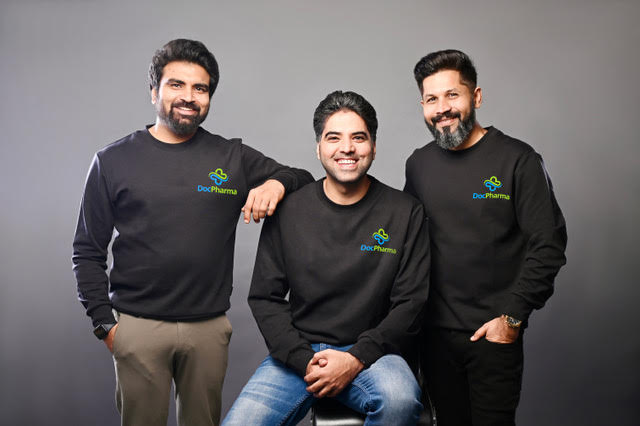
By the Founders of DocPharma | Saquib Ali, Shashank Rai and Sagar Chauhan
India’s outpatient healthcare market is enormous, yet it remains one of the least insured parts of the system. In this piece, we set out how digital pharmacy networks can close that gap, and what stands in the way of making cashless pharmacy work at scale.
The OPD market is valued at about $37.7 billion, but insurance covers less than 0.1% of it. Medicines account for roughly 60% of spend, so well over $20 billion a year goes on everyday prescriptions, almost all of it paid out of pocket.
Insurance is now moving towards this gap. One forecast has India’s health insurance market growing from $16.7 billion in 2025 to $39.5 billion by 2032, a 13.1% annual rate. Hospitalisation still holds about 58%, but outpatient and day-care cover is projected to grow at more than 18% a year through 2031.
Corporate wellness is a smaller market, about $675 million in 2025, but it is where OPD cover is most likely to scale first. Chronic illness costs employers 14% of working days, which is why they are being urged to build OPD benefits into wellness programmes.
Why OPD insurance hasn’t taken off
The reason is how claims work today. The model runs on reimbursement: the customer pays at the pharmacy, collects the paperwork and waits. Claims at non-network providers can take two to four weeks because bills are checked manually, even though insurers must settle within 30 days of complete documents (45 if an investigation is needed). Delays usually come from documents that don’t line up, such as a mismatch between the doctor’s notes and the pharmacy bill.
The insurer has its own problems. Processing thousands of small pharmacy claims is expensive, and without SKU-level visibility it cannot see what was dispensed or enforce what the policy covers. Insurers also worry about overconsumption, because a customer can walk into any chemist, and say they need a pharmacy network to secure preferred rates.
What a digital pharmacy network changes
Digital pharmacy networks move the claim to the moment of the order. When a customer orders a medicine, the platform checks eligibility and coverage in real time. The prescription is validated, a pharmacist verifies it, and an itemised invoice goes to the insurer automatically, so there are no documents to chase and nothing to reconcile later. The consumer pays nothing or only a co-pay.
The insurer receives structured, line-by-line data. That makes straight-through processing possible, lets it apply limits and generic-substitution rules, and cuts leakage.
Regulation is already moving towards real-time settlement. IRDAI’s 2024 master circular requires cashless authorisation within one hour and discharge within three hours. Those rules cover hospital claims, but we believe OPD pharmacy is the next place for the same standard.
Six hurdles to cashless pharmacy at scale
The biggest challenge in cashless pharmacy is not enabling digital payments. It is connecting a fragmented medicine ecosystem to an insurance system that was designed around hospitals. Six specific problems decide whether it can scale.
1. There is no common network, workflow or product language
The All India Organisation of Chemists and Druggists speaks for more than 12.4 lakh licensed chemists, and one estimate put unorganised outlets at 88.7% of retail pharmacies in 2021. Each runs its own billing system, processes vary across insurers, TPAs and providers, and only 12 insurers had joined the national claims exchange by November 2023.
Medicines add a further gap: every claim line needs the right product, pack and price, which needs a common product master. India’s digital health mission is only now building one, through a central drug registry.
2. Prescription compliance cannot be automated until prescriptions are structured
A Kerala study found 80.8% of pharmacists report hard-to-read prescriptions, and dispensing errors were the most common result. Doctors in cities have largely moved to digital prescriptions, but rural and small-town practice is still mostly handwritten. For Schedule H and H1 drugs, pharmacies must also keep a copy of the prescription.
A claims engine can only approve what it can verify: the doctor, the diagnosis, the drug, the dose and the duration. A photo of a handwritten slip cannot be checked that way.
3. The economics have to work for the pharmacy
Chemists are already pressing for sustainable margins, faster inventory turnover and reasonable credit terms. Hospital cashless shows what happens when settlement and tariffs are unclear: associations accuse insurers of underpaying, insurers accuse hospitals of inflating bills, and cashless services at 15,200 member hospitals were restored only after a settlement meeting with Bajaj Allianz.
In our view, a pharmacy bill is small, so the administrative cost of each claim must be very low and settlement predictable. If rejections and delays accumulate, small pharmacies will simply stop participating.
4. Patients do not know what is covered until the counter
Insurers received 325.72 lakh health claims in FY 2023–24, and common reasons for partial disallowance are co-payments, deductibles, sub-limits and non-medical expenses. Much of the root cause is policyholders not understanding policy terminology; one survey found 43% had difficulty with claim processing.
OPD and pharmacy benefits vary widely between products, so cashless fails at the moment of purchase if the patient cannot see in advance which medicine is covered, what the co-pay is and whether pre-authorisation is needed.
5. Insurers need protection from leakage in small, frequent claims
A BCG and Medi Assist report estimates that fraud, waste and abuse cost Indian health insurers ₹8,000–10,000 crore a year. About 90% of claims carry no risk, 2% are confirmed fraud and 8% sit in a grey zone. Claims under ₹50,000 are a growing hotspot because they are lightly scrutinised and hard to contest.
OPD pharmacy claims fit that profile exactly. Unless each claim is tied to a verified prescription, item-level data and proof of delivery, insurers will have to cap or restrict the benefit, and that limits who can use it.
6. The network has to work beyond the metros
An average offline pharmacy carries 6,000–8,000 SKUs, against 50,000 or more online, according to Invest India data from 2021. Temperature-controlled infrastructure is still built around a few large hubs, and a 2024 review lists weak regulation, limited internet coverage and low digital literacy as barriers.
A digital interface without dependable stock, compliant dispensing and fulfilment behind it does not solve the access problem.
Where this leaves us
Scaling cashless pharmacy will take insurers, pharmacies, doctors and technology-led supply chains working together. The prize is large: a sizeable share of India’s everyday medicine spending moving from out-of-pocket payment to insured, verified and transparent care.
The founders of DocPharma write on the infrastructure behind accessible, insured healthcare in India.