

 0
0 0
0
Hyderabad, India — August 2026: India’s security infrastructure is increasingly moving beyond standalone camera installations toward integrated surveillance systems that bring together cameras, connectivity, power resilience, monitoring and maintenance.
Brihaspathi Technologies has undertaken surveillance and security projects across different operating environments, including a Border Security Force (BSF) deployment across sensitive international border locations and a CCTV surveillance project for the Visakhapatnam City Police Commissionerate.
The two projects illustrate how surveillance infrastructure can be adapted to different operational conditions — from remote border locations with connectivity and power constraints to an industrial policing environment requiring coverage of strategically identified areas.
Engineering for Mission-Critical Security
At Brihaspathi Technologies, Chairman and Managing Director Rajasekhar Papolu leads the company’s work across technology areas including AI-driven security solutions, surveillance, IoT and digital infrastructure. The company’s official profile identifies Papolu as its Chairman and Managing Director and describes his focus on AI, software development and security systems.
For security and law-enforcement environments, the emphasis is increasingly shifting from individual devices to systems that can combine surveillance, communications, connectivity and monitoring.
“Effective surveillance is not simply about installing cameras; it is about building an infrastructure ecosystem that continues to work when and where it is needed most.”
Technology Supporting Border Security
The Border Security Force operates along India’s international borders, where surveillance infrastructure often has to function across remote and geographically challenging locations.
Brihaspathi Technologies‘ published BSF case study covers deployments at Berhampore, Malda and Jaisalmer, including locations along the Bangladesh and Pakistan borders. The company’s case study describes the use of IP-based CCTV systems and supporting communication infrastructure to provide real-time surveillance capabilities in these environments.
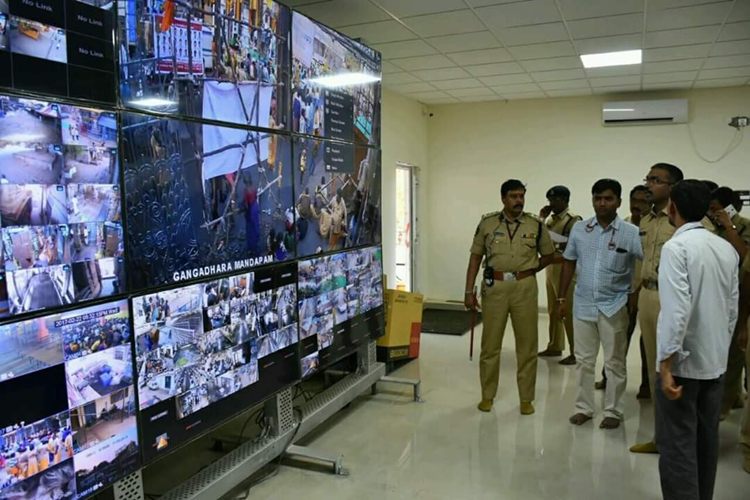
A multi-screen command wall gives officers a consolidated, real-time view across monitored locations, including the Gangadhara Mandapam precinct.
The company’s more recent corporate material states that 674 surveillance cameras were installed across sensitive international border locations as part of the BSF project.
The deployment included both PTZ and static bullet cameras. Brihaspathi’s published case study records different camera configurations across the three locations, including PTZ and static cameras at Berhampore, Malda and Jaisalmer.
The project also faced infrastructure challenges. According to the company’s case study, several locations had limited daytime access to electricity, while remote terrain made civil works, pole erection and conventional cable laying difficult. Some sites also lacked the infrastructure required for wired connectivity, while maintaining stable communication across river bodies presented an additional challenge.
To address these conditions, the project incorporated supporting infrastructure alongside the surveillance cameras. Brihaspathi’s case study describes inverter-based backup systems, solar-powered solutions and wireless communication infrastructure for locations where conventional connectivity was difficult to establish.
This approach highlights an important aspect of surveillance deployment in remote environments: the effectiveness of the camera network depends not only on the cameras themselves but also on reliable power, communication and supporting infrastructure.
Bringing Integrated Surveillance to City Policing
The same broader approach can be seen in Brihaspathi Technologies’ project for the Visakhapatnam City Police Commissionerate.
According to Brihaspathi’s official project records, the company undertook the supply, installation and maintenance of CCTV surveillance cameras at strategic locations within the limits of the Steel Plant Police Station, under the RINL-CSR initiative.
The company’s government-project page describes the objective as enhancing the security infrastructure of the Visakhapatnam City Police Commissionerate through a CCTV surveillance system designed to provide complete visual coverage across critical areas within the Steel Plant Police Station jurisdiction.
Unlike a remote border environment, an industrial policing area presents a different set of surveillance requirements. Camera locations have to be identified according to the characteristics of the area, movement patterns and operational requirements.
The project therefore demonstrates the importance of planning surveillance around specific security requirements rather than relying on a uniform deployment model.
Beyond Cameras: Building the Infrastructure Behind Surveillance
The BSF and Visakhapatnam projects illustrate two different applications of surveillance technology.
In remote border locations, the supporting infrastructure may need to address power availability, connectivity, terrain and physical accessibility. Brihaspathi’s BSF case study specifically documents challenges involving power, cable deployment and communication links, together with the use of backup power, solar solutions and wireless connectivity.
In an urban-industrial policing environment, the emphasis shifts toward identifying strategic locations and creating visual coverage across designated areas. Brihaspathi’s Visakhapatnam project was designed around this requirement within the Steel Plant Police Station jurisdiction.
The distinction demonstrates why surveillance infrastructure increasingly requires system-level planning.
Cameras remain the most visible part of the system, but their effectiveness depends on the infrastructure supporting them — including communications, power, monitoring and maintenance.
A Broader Vision for India’s Security Infrastructure
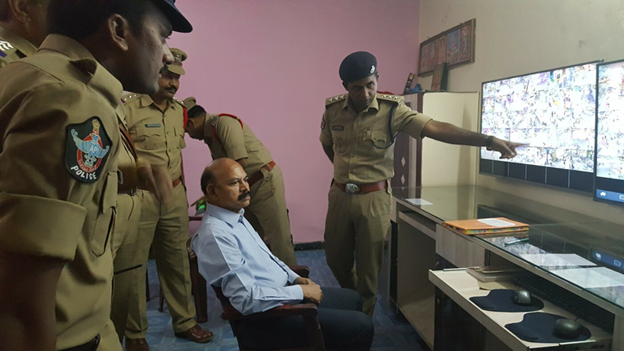
Visakhapatnam City Police officials review consolidated CCTV feeds from across the monitored jurisdiction.
India’s security requirements span highly populated urban areas, industrial facilities, critical infrastructure and geographically challenging border locations.
The experience documented by Brihaspathi Technologies across its government projects reflects this diversity. Its project portfolio includes the Visakhapatnam City Police Commissionerate as well as the BSF border-surveillance deployment, alongside other government surveillance and technology projects.
The two projects represent different operational requirements.
For the BSF deployment, surveillance infrastructure had to be adapted to remote locations where power and connectivity presented significant challenges. For the Visakhapatnam City Police project, the focus was on establishing CCTV coverage across strategically identified areas within the Steel Plant Police Station jurisdiction.
In both environments, the underlying requirement is dependable access to surveillance information that can support operational awareness.
From Surveillance to Intelligent Security Infrastructure
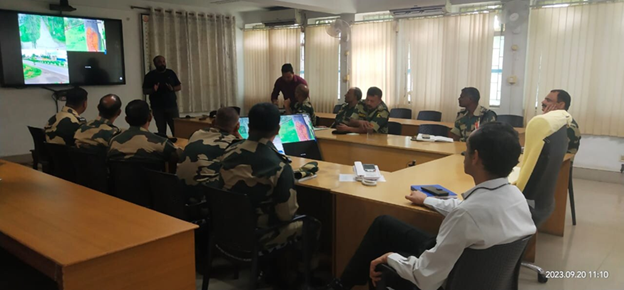
A field briefing with BSF personnel reviewing live surveillance feeds and terrain mapping as part of the monitoring rollout.
The evolution of surveillance technology is increasingly moving toward connected systems that can incorporate video analytics, intelligent monitoring, communications and other digital technologies.
Brihaspathi Technologies currently describes its capabilities as including intelligent surveillance, AI-driven analytics, smart mobility and secure digital infrastructure for governments, enterprises and smart cities.
This broader approach changes the way organisations evaluate surveillance infrastructure.
The question is no longer simply how many cameras need to be installed. Other considerations include where cameras should be positioned, how systems will remain operational during infrastructure limitations, how data will be transmitted from remote locations and how surveillance networks can be maintained over time.
The BSF and Visakhapatnam projects provide examples of how those requirements can differ according to geography, infrastructure and operational context.
The Role of Rajasekhar Papolu
For Rajasekhar Papolu, Chairman and Managing Director of Brihaspathi Technologies, the company’s security and surveillance work forms part of a broader technology vision encompassing AI, IoT, digital transformation and security systems.
Brihaspathi’s current leadership profile describes Papolu as a technology entrepreneur focused on AI-driven security solutions, smart governance and digital transformation.
His approach places emphasis on integrating different technology components rather than treating surveillance as an isolated product category.
As security requirements become more complex, that integration can become increasingly important for organisations operating across cities, industrial environments and strategically sensitive locations.
Supporting the Next Generation of Security Systems
From the remote stretches of India’s international borders to industrial policing environments, surveillance requirements are shaped by the conditions in which systems have to operate.
Brihaspathi Technologies’ documented BSF deployment demonstrates the need to combine surveillance with power and communication infrastructure in challenging locations. Its Visakhapatnam City Police project demonstrates a different application, focused on strategic CCTV coverage within a defined industrial-policing jurisdiction.
Together, these projects illustrate the broader transition from standalone surveillance equipment toward integrated security infrastructure.
As cities, industries and strategic locations continue to adopt connected technologies, the ability to design, deploy and maintain surveillance systems around specific operational requirements will remain an important part of India’s evolving security infrastructure.