

 0
0 0
0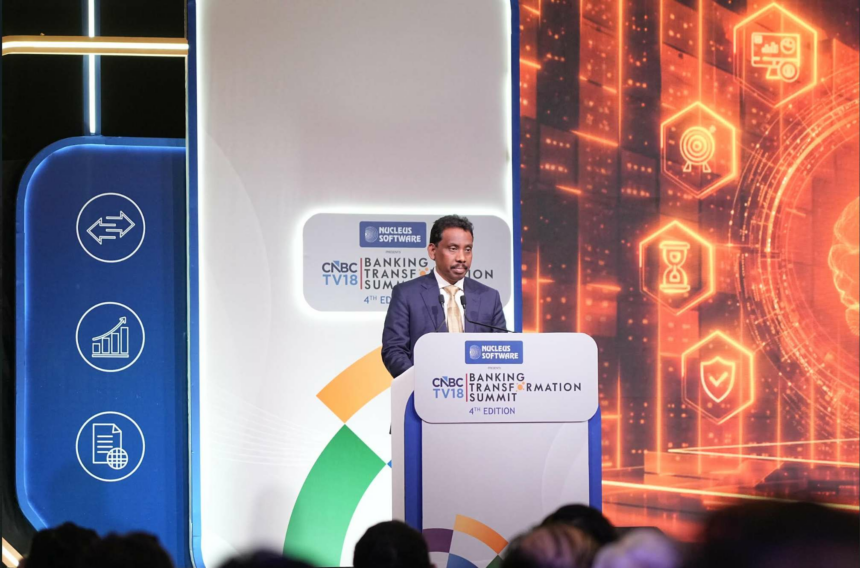
Four days after the Prime Minister’s Red Fort pledge to train a crore Indians in AI, the country’ s banking establishment gathered for the fourth CNBC-TV18 Banking Transformation Summit, presented by Nucleus Software , filled with a n understanding that India’s financial ecosystem had crossed a threshold. As t he event theme ‘Scaling Bharat: Powering Progress with Responsible AI’ implied, t he question was no longer whether artificial intelligence would transform banking. Now, the aim was to articulate a vision for the kind of transformation India would create, who would benefit, and how intelligence would be accompanied by responsibility.
The Scale of Bharat
Parag Bhise, Chief Executive Officer and Executive Director of Nucleus Software, opened the proceedings with a n idea that became the Summit ’s intellectual anchor. “Responsible AI cannot be treated as an additional compliance layer ,” he declared. “It must be embedded into the design of the institution.”
A prescription on how to responsibly deal with the unprecedented explosion of computing power came from Shirish Chandra Murmu, Deputy Governor of the Reserve Bank of India , who delivered the keynote speech. He offered a four-tiered framework , in which analytical intelligence of data and models form the building blocks , augmented by human experience and judgment, and the governance intelligence of boards and senior management, to be finally validated by the collective intelligence emerging at the system s level .
The Deposit Dilemma
The collective intelligence of the banking system certainly plays a key role in navigating the transformation underway, epitomized by leaders who participated in the banking panel, including Ashwini Kumar Tewari, Managing Director of State Bank of India , Rajiv Anand, Managing Director and Chief Executive Officer of IndusInd Bank , Ashok Chandra, Managing Director and Chief Executive Officer of Punjab National Bank , and Sanjay Agarwal, Managing Director and Chief Executive Officer of AU Small Finance Bank .
They spoke to session moderator, Latha Venkatesh of CNBC-TV18 , about the structural challenge s that had preoccupied the industry , especially the slowing growth of deposits . Ashwini Kumar Tewari proposed innovative approaches to raise funds, like infrastructure bonds, securitization and transaction banking. Ashok Chandra added that public sector banks need ed to embrace wealth management and relationship manage ment concepts that private sector banks had long deployed.
Strategic Ambitions
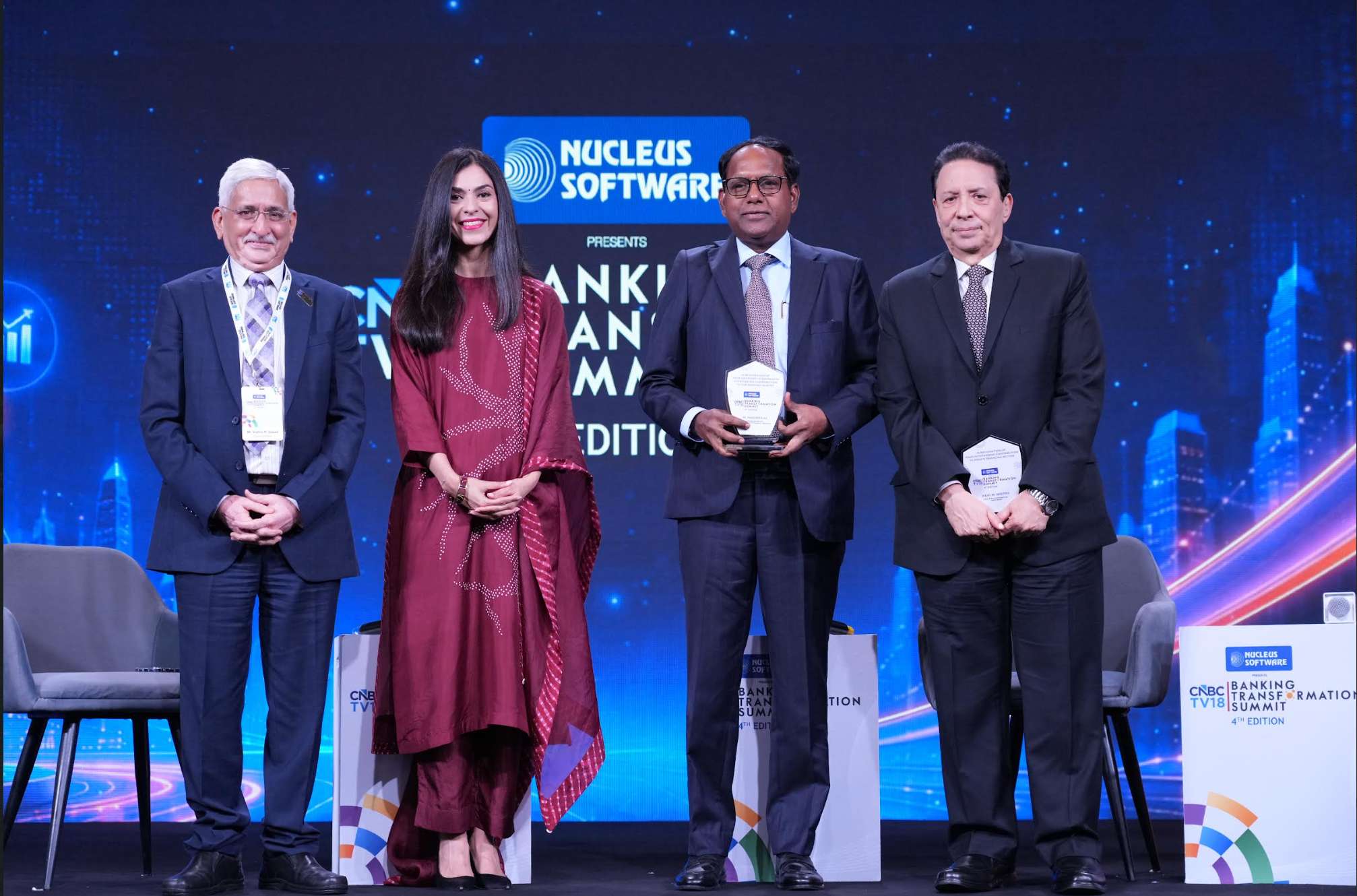
From the ripples of changing customer preferences, the conversation moved to the undercurrents of strategic ambition shaping banking, with a fireside chat featuring two luminaries of Indian finance, Keki Mistry, Non-Executive Director of HDFC Bank, and M. Nagaraju, former Secretary of the Department of Financial Services . The session, moderated by Shereen Bhan, Managing Editor of CNBC-TV18 , offered a glimpse of the potential of Indian banking. Keki Mistry struck an optimistic note. “ We will grow for sure, ” he said, “ and what will contribute to the growth will be the demographics. ”
M. Nagaraju noted that MSME growth and agricultural lending had been particularly strong, signalling a willingness among Indians to take risk and bet on the future. As for the next lever of growth, he suggested increasing the foreign direct investment limit in public sector banks , which would unlock more capital for credit and higher valuations for Indian banks .
The Intelligent Stack
Between these panel discussions, the audiences were treated to a spotlight interview with Vishnu R. Dusad, Co-founder and Managing Director of Nucleus Software, who took the stage to talk about building the intelligent banking stack. He traced the evolution of banking technology through three waves , from the creation of systems of record, to expanding access via the internet , and finally, the automation of decision-making itself. On the question of whether AI could be trusted with credit decisions, Vishnu Dusad was measured. Underwriting required far greater governance, he asserted , because denying credit to someone who deserved it had real consequences.
Pushing The Limits
Nothing spells growth quite like Indian fintech, which was represented on a dedicated industry panel by Anirban Mukherjee, Chief Executive Officer of PayU , Akash Sinha, Co-Founder and Chief Executive Officer of Cashfree Payments , Miten Sampat, Interim Chief Executive Officer of CRED , Sohini Rajola, Executive Director of NPCI , and Ranvir Singh, Chairman and Chief Executive Officer of Kissht . High on their agenda were discussions on the future of UPI, punctuated by the transformative potential of AI, and the imminent introduction of merchant discount rate charges.
A potential stumbling block to the growth of UPI, especially for lending, comes in the form of Reserve Bank of India’s draft circular on revolving credit, which dominated exchanges during the evening’s final panel, featuring NBFC leaders Abhishek Dwivedi, Managing Director and Chief Executive Officer of Navi Finserv , Sudipta Roy, Managing Director and Chief Executive Officer of L&T Finance , Abhimanyu Munjal, Managing Director and Chief Executive Officer of Hero FinCorp , and Jairam Sridharan, Managing Director and Chief Executive Officer of Piramal Finance . Curbing NBFCs’ ability to offer revolving credit, as the circular intends to, would shut off nearly ₹ 2 lakh crores in credit supply, the panel estimated.
The Foundation of Trust
Throughout the fourth edition of Banking Transformation Summit , it became clear t he next phase of banking transformation would not be defined by technology alone. Trust, in the end, would determine how confidently customers embrace AI-enabled financial services , while g overnance would determine how safely institutions deplo y them. And collaboration between regulators, banks, financial institutions and technology providers would ultimately de cide how meaningfully AI contribute s to Bharat’s progress.
India has already demonstrated what digital infrastructure can achieve at scale. The next frontier is to build intelligence at scale-with trust at its core.