

 0
0 0
0
Guwahati, October 2026: When Brand Imprint opened in Guwahati in 2017, a digital marketing agency in the Northeast was expected to do one or two things. Run some social media pages. Design a logo. Anything larger went to Mumbai or Delhi.
Nine years later the agency has a team of over 40, has worked with more than 1,000 brands, and has collected three national awards. Its client list now runs well past the Northeast. It also does something most agencies its size do not attempt. Alongside campaigns and creative, it builds websites, mobile applications and custom software in-house.
That range is the point. The founders argue that the gap between a campaign that looks good and a campaign that earns money usually sits in the places a narrow agency cannot reach.
Creative that is built to work, not just to win approval
Creative is where most client relationships start, and where most of them go wrong.
“Clients are shown a beautiful campaign, they approve it, and then it does not perform,” said Prachi Agrawal, Co-Founder of Brand Imprint. “The creative was never wrong exactly. It was just made to impress the client sitting in the room instead of the customer scrolling past it at eleven at night. Those are two completely different audiences and we are clear about which one we are designing for.”
The agency’s creative work covers brand identity, packaging, campaign design and video production. Over the years it has handled launches and campaigns for names including Hard Rock Cafe and Playboy Beer Garden in Guwahati, EBCO, ACKO Insurance and NorthEast United FC.
What the team insists on is that creative gets tested rather than admired. Multiple versions go live, the weaker ones are cut quickly, and the reasons are explained to the client in plain language.
The technical side nobody puts in a pitch deck
A large share of wasted ad spend has nothing to do with the advertising.
Forms that break on a mid-range Android phone. Landing pages that take nine seconds to load on a patchy connection. Tracking that was set up once and never checked, so nobody can tell which campaign actually produced the enquiry. These are the problems Brand Imprint says it finds most often when it takes over an account.
Having developers in the same office changes what can be fixed. The agency builds its own landing pages and websites, sets up its own tracking, and has written custom software for clients whose requirements went past marketing altogether, including enterprise systems and mobile applications.
“We do not have to raise a ticket with another vendor and wait two weeks to get a form fixed,” said Vishal More, Co-Founder of Brand Imprint. “That sounds small. It is the difference between losing a month of a client’s budget and losing an afternoon.”
Service quality, measured the boring way
The agency’s view is that most clients leave not because results were poor but because nobody picked up the phone.
Reporting is deliberately plain. The team’s position is that a client should be able to read a monthly report without a translator, and that an agency hiding behind impressions and reach numbers is usually hiding something. Where a campaign has underperformed, the report says so.
Clients come from real estate, construction materials, automobiles, education, hospitality, manufacturing, retail and food and beverage. Each of those behaves differently. A builder selling a two-crore apartment, a cement dealer chasing trade enquiries and a car showroom working the festive season need three separate playbooks, and the agency says the single biggest mistake in the industry is running one playbook everywhere because it is easier to manage.
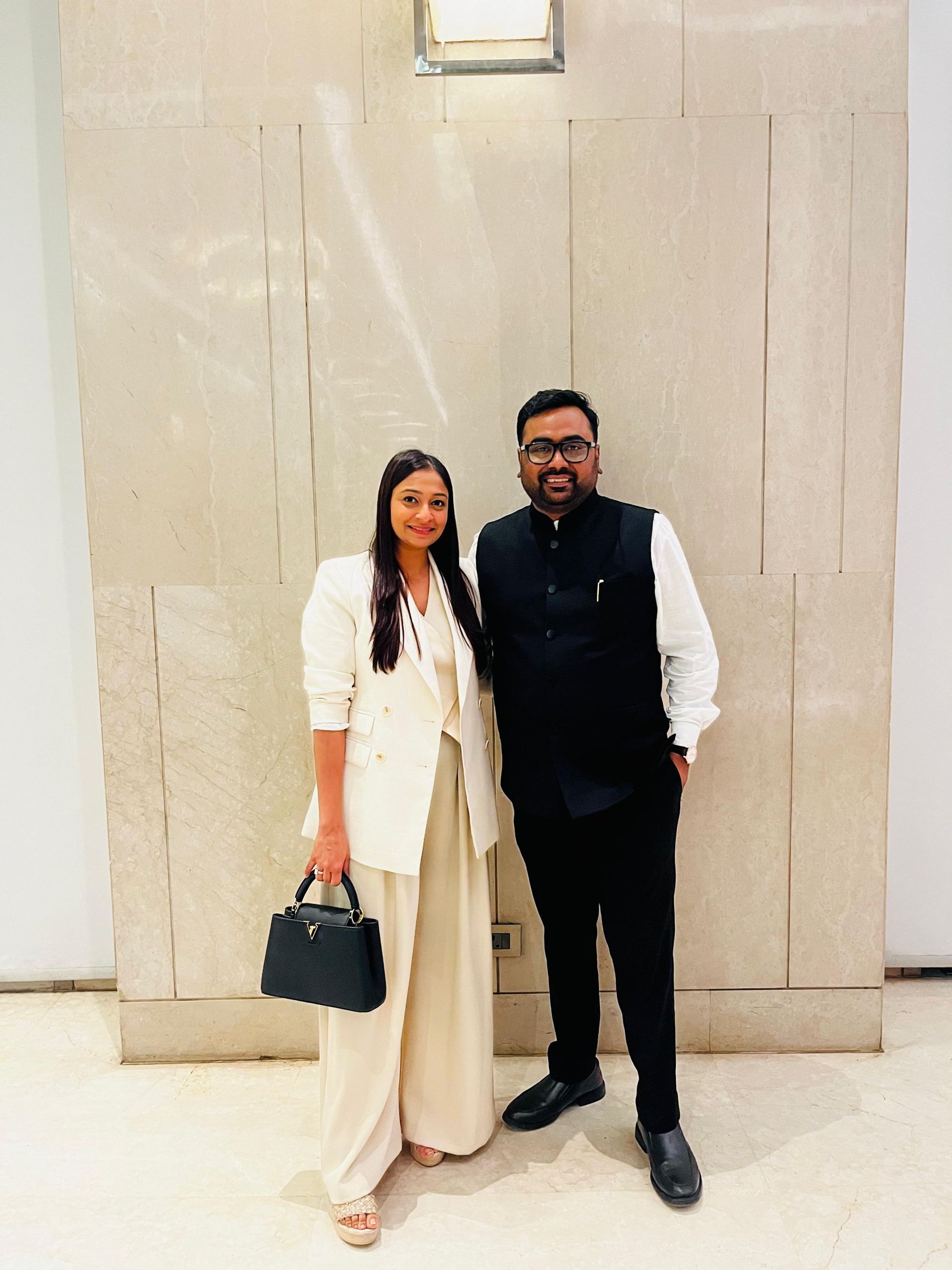
Built in the Northeast, built for India
The agency is open about the fact that its address used to be treated as a disqualification.
“For years the assumption was that a Guwahati agency could handle Guwahati work and nothing beyond it,” said More. “We were built here, and that is not a limitation we have to apologise for. It is where we learned to make a rupee go further than it does in a metro, because our clients could not afford for it to go anywhere else. That discipline travels. We take on work anywhere in the country now and the client does not care where our office is, only whether the numbers move.”
Agrawal makes the same point about talent. Roughly nine in ten of the team are in their twenties, hired locally and trained in-house, in a region that has historically exported its young marketers to Bengaluru and Delhi.
“There is no shortage of ability here,” she said. “What was missing was somewhere to use it without buying a one-way ticket out of the state.”
Experience that is hard to shortcut
Nine years in one market produces a particular kind of knowledge.
Media consumption across the eight Northeastern states does not follow national patterns, so plans built on national benchmarks tend to misallocate spend from the first week. Language and dialect shift over short distances. Festive calendars differ. Trust is built through community credibility more than reach.
None of this is available in a research report. It accumulates through campaigns that worked, campaigns that did not, and over a thousand brands’ worth of pattern recognition.
Where AI has actually helped
The agency has moved on AI in two places, and is careful to separate them.
The first is search. A growing number of customers now ask an AI assistant for a recommendation instead of scrolling through search results, and a business absent from those answers never learns about the enquiry it lost. Brand Imprint has added answer engine and generative engine optimisation to its search practice to get clients visible there early.
The second is internal. AI has compressed the parts of agency work that used to eat the most time. Campaign data that once took most of a day to read through is now turned around in a fraction of that, and creative variations that took a week can be produced in a day, which means more versions get tested instead of the team betting everything on one idea.
“AI has not replaced anyone here and it has not changed what we are selling,” More said. “What it has done is remove the drudgery. The team spends its time on judgement calls instead of pulling numbers into spreadsheets. That shows up in the work, but it is a tool, not the pitch.”
The founders’ broader claim is that the old trade-off has gone. A brand no longer has to choose between an agency that understands the Northeast and one capable of serious work, and a company headquartered in Guwahati no longer has to confine itself to the Northeast to find either.
About Brand Imprint
Brand Imprint is a digital marketing agency headquartered in Guwahati, Assam, working with clients across Northeast India and nationally. Founded in 2017, the agency has a team of over 40 and has served more than 1,000 brands, with three national awards to date. Its services include creative and brand design, social media marketing, SEO, AEO and GEO, performance marketing on Google and Meta, website design and development, and mobile app and software development. Clients span real estate, construction materials, automobiles, education, hospitality, manufacturing, retail and food and beverage. More information is available at brandimprint.in.