

 0
0 0
0
For most of the last century, consumer commerce ran on an implicit bargain. Shoppers accepted products designed for no one in particular in exchange for affordability and availability at scale. That century old bargain is now quietly coming undone. Consumers now increasingly expect to be treated as individuals, and they are willing to pay a premium for it. A research by Deloitte found that a significant share of consumers will pay a premium for personalised products. A global study by Dassault Systèmes quantifies the average premium at roughly 25 percent, rising toward 30 percent in categories such as gifting, where individuality is at the core of the value proposition. Medallia reports that 61 percent of consumers would spend more for a personalised experience. The demand was never the question, the supply was.
Personalisation’s core challenge is a production problem
A personalised product does not exist until it is ordered. That single fact defines the entire challenge. There is no shelf, no warehouse, no finished inventory waiting. The product is manufactured after the customer demands, meaning that speed, accuracy and scale must all be solved at the same moment, on every individual order. The three imperatives work against one another. Accelerate throughput and error rates rise. Inspect more rigorously and turn around time increases, add volume and both pressures compound. This explains why personalisation remained, for years, a slow and premium niche. The companies now winning are those that solved production, not positioning. Three of them merit close study, because each resolved the same constraint in a fundamentally different way.
Lenskart: Own the Technology
Courtesy: lenskart.com
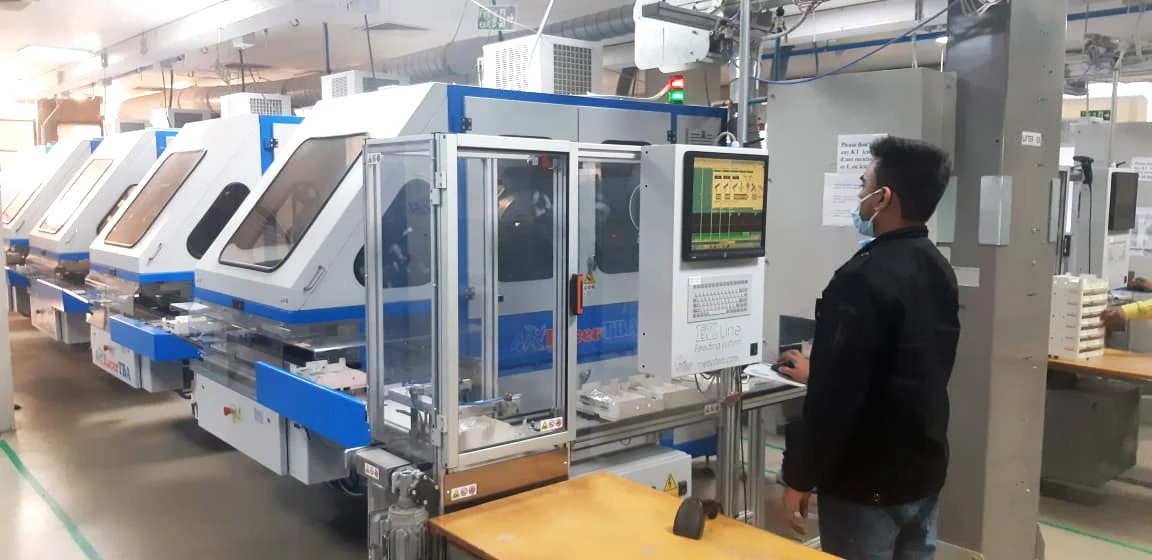
Every pair of prescription glasses is a personalized product. It is manufactured to one individual’s exact prescription and holds no value for anyone else. Lenskart took the most demanding version of the challenge, a medical grade custom product in which a small error carries serious consequences, and solved it at mass market scale.
Founded in 2010 by Peyush Bansal, Lenskart built its advantage on a refusal to outsource. The company designs, manufactures and retails its own eyewear through a vertically integrated model, anchored by a heavily automated facility in Bhiwadi, Rajasthan, among the largest of its kind in Asia and, by some measures, one of the top two vertically integrated prescription eyewear plants globally. Annual capacity runs into tens of millions of units. That ownership is what purchases speed. A custom prescription can be assembled in approximately a day, and in major metros delivery arrives within 24 to 48 hours, against the
two to three weeks a traditional optician once required. For select products it has gone further, offering eyeglasses through quick commerce in minutes. Lenskart controls the entire chain hence it governs quality at the point of production rather than relying on supplier diligence, the only viable approach to holding accuracy on a medical product at that volume.
How Lenskart resolves the constraint: It owns the means of production and automates them, so speed and accuracy cease to be a trade-off and become a function of the machine.
Vistaprint: Build the Supply Chain
Courtesy : cimpress.com
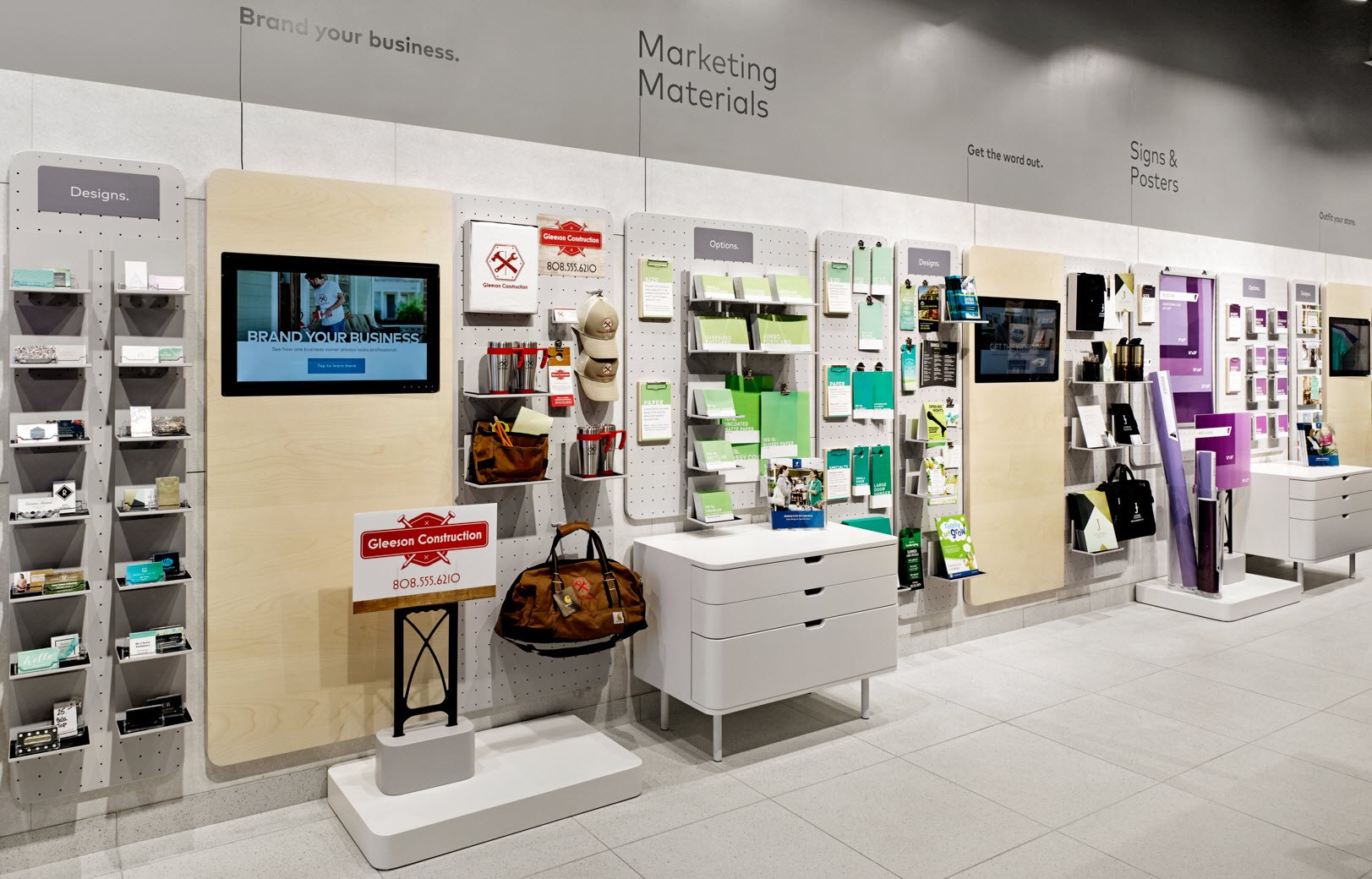
Where Lenskart went deep on a single product, Vistaprint went wide across thousands. It is the company that demonstrated to the internet that a small business could order a hundred custom business cards, or fifty branded mugs, at a price point that once required a print run of ten thousand.
Founded in 1995 by Robert Keane, Vistaprint pioneered web-to-print, and its parent company Cimpress has invested hundreds of millions in what it terms a mass customisation platform. The logic is elegant. Thousands of micro custom orders, a business card here, a corporate gift there, each unique, are aggregated and routed through computer integrated manufacturing so they can be produced at close to the efficiency and cost of mass production. Cimpress now fulfils more than 30 million custom orders annually across its brands and generates several billion dollars in revenue. For businesses, and particularly for corporate gifting and branded merchandise, Vistaprint became the default. It converted personalisation for organisations from a special project into a routine purchase.
How Vistaprint resolves the constraint: it built a supply chain and manufacturing platform that batches enormous volumes of small bespoke orders, so personalisation inherits the economics of scale.

Zootii by Bibliophiles (Children Lifestyle Products) : Build the Intelligence
The third approach is the newest, and it points most directly at where the category as a whole is now heading. Zootii, built by Bibliophiles Global out of Mumbai by industry veterans and co-founding power couple Adnyesh Dalpati and Apurva Mhatre, produces personalised essentials for children. Name labels, luggage tags, bags, drinkware and foodware, in a category that had, until recently, remained conspicuously underserved. Indian parents had credible brands for children’s bodycare, nourishment, toys and apparels, yet the items children use daily offered no quality, no design and no personalisation worth the name. Zootii filled that gap and extended naturally into gifting, where a personalised product for a child is a present that reliably lands.
The company reports that within two and a half years of operation it has shipped more than 1,00,000 personalised orders, reaching even the most remote parts of India. Zootii’s operating system connects the entire business, sales, operations, production, logistics,
payments and banking, and manages the coordination on which personalisation typically breaks. It assigns and prioritises tasks, constructs dependency graphs so nothing waits on human recall, and forecasts supply gaps before they materialise. Most critically for accuracy, it runs checks at every checkpoint before anything advances. An error is intercepted before it is manufactured. For the team, this converts a role that would demand precise co-ordination across multiple platforms into something considerably simpler. That systematised accuracy is precisely what unlocks the next stage. The process is reliable and coordinated rather than dependent on human vigilance.
Why this is the wave
The next obvious step would be Quick commerce for personalised goods which was long deemed impossible, because quick commerce requires a finished product in hand within minutes. These 3 companies approach to make production so accurate and so automated that distance and time collapse, supported by a network of small production hubs positioned close to customers can make this the foundation for Quick commerce.
Viewed side by side, the three cases reveal a clear pattern. Demand for personalisation was always present, and consumers were always prepared to pay a premium for it. What constrained the category was a production problem, and each of these companies resolved that problem at a different layer. Lenskart at the factory, Vistaprint at the supply chain, Zootii at the intelligence layer that orchestrates the whole operation. Owning factories or building a print platform and supply chain demands considerable time and capital. An operating system that makes any personalised business accurate and fast, however, is the most portable form of the solution for smaller companies, and the one that scales into new categories most readily. Mass production made everything identical. The next wave makes everything yours.
Important Backlinks
4.https://store.bibliophiles.in/collections/mix-transparent-labels
5.https://store.bibliophiles.in/collections/schoolbag
6.https://store.bibliophiles.in/collections/transparent-bag-tags