

 0
0 0
0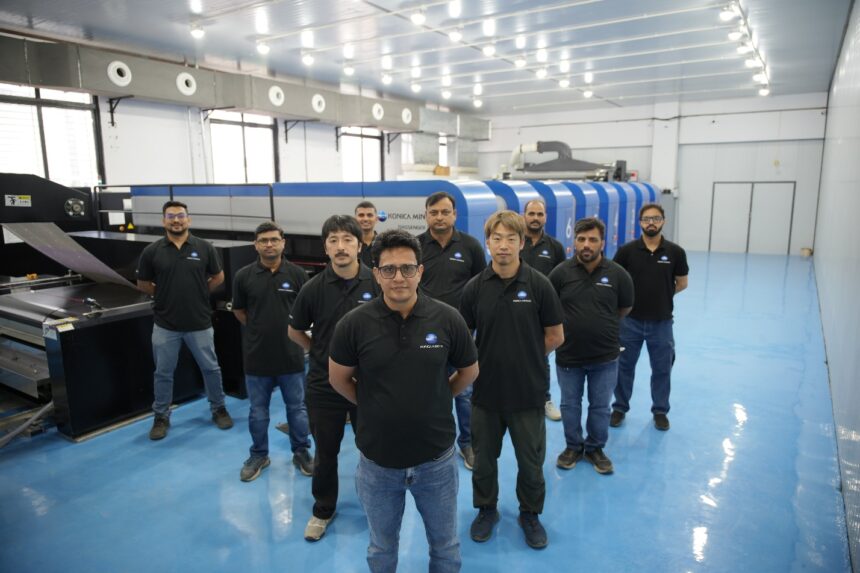
The shift from conventional textile printing to digital is no longer a future possibility. It is already happening at industrial scale. A strong example of this transformation is the Konica Minolta NASSENGER SP-1e, an ultra-high–speed single-pass Digital Textile Printer developed with advanced Japanese technology for large-scale textile production.
The NASSENGER SP-1e has entered major textile manufacturing markets. The first NASSENGER SP-1e sale/installation reported in India now marks an important milestone for the country’s digital textile printing industry.
With a production speed of up to 6,400 sqm/hour, the NASSENGER SP-1e can theoretically produce up to approximately 153,600 sqm over 24 hours at maximum rated speed. Actual production depends on operating conditions, fabric, print mode, maintenance requirements and production utilisation.
This changes the way manufacturers look at digital printing.
Digital is no longer limited to sampling, short runs or boutique production. With technologies such as the NASSENGER SP-1e, it can now become part of mainstream industrial textile manufacturing.
From Conventional Printing to Digital Manufacturing
Conventional rotary and screen printing have built the scale of the global textile industry, but market requirements are changing rapidly.
Fashion cycles are becoming shorter. Buyers are reducing inventory. Designs are changing faster. Order quantities are becoming more fragmented, while expectations around quality, sustainability and delivery timelines continue to increase.
This is accelerating the adoption of the Digital Textile Printer.
Unlike conventional processes that require physical screens, a Digital Textile Printing Machine allows manufacturers to move directly from a digital design file to production.
This creates a more flexible manufacturing model with faster design changes, reduced setup dependency, shorter lead times and better suitability for multiple designs and varying order quantities.
For Indian textile manufacturers, this transition is especially important.
India has a once-in-a-generation opportunity to increase its share of global textile and apparel exports. The country already has fibres, yarns, weaving, knitting, processing, garmenting, skilled manpower and one of the world’s largest textile manufacturing ecosystems.
The next stage will depend on technology, consistency, scalability and sustainability.
NASSENGER SP-1e: Japanese Single-Pass Technology for Mass Production
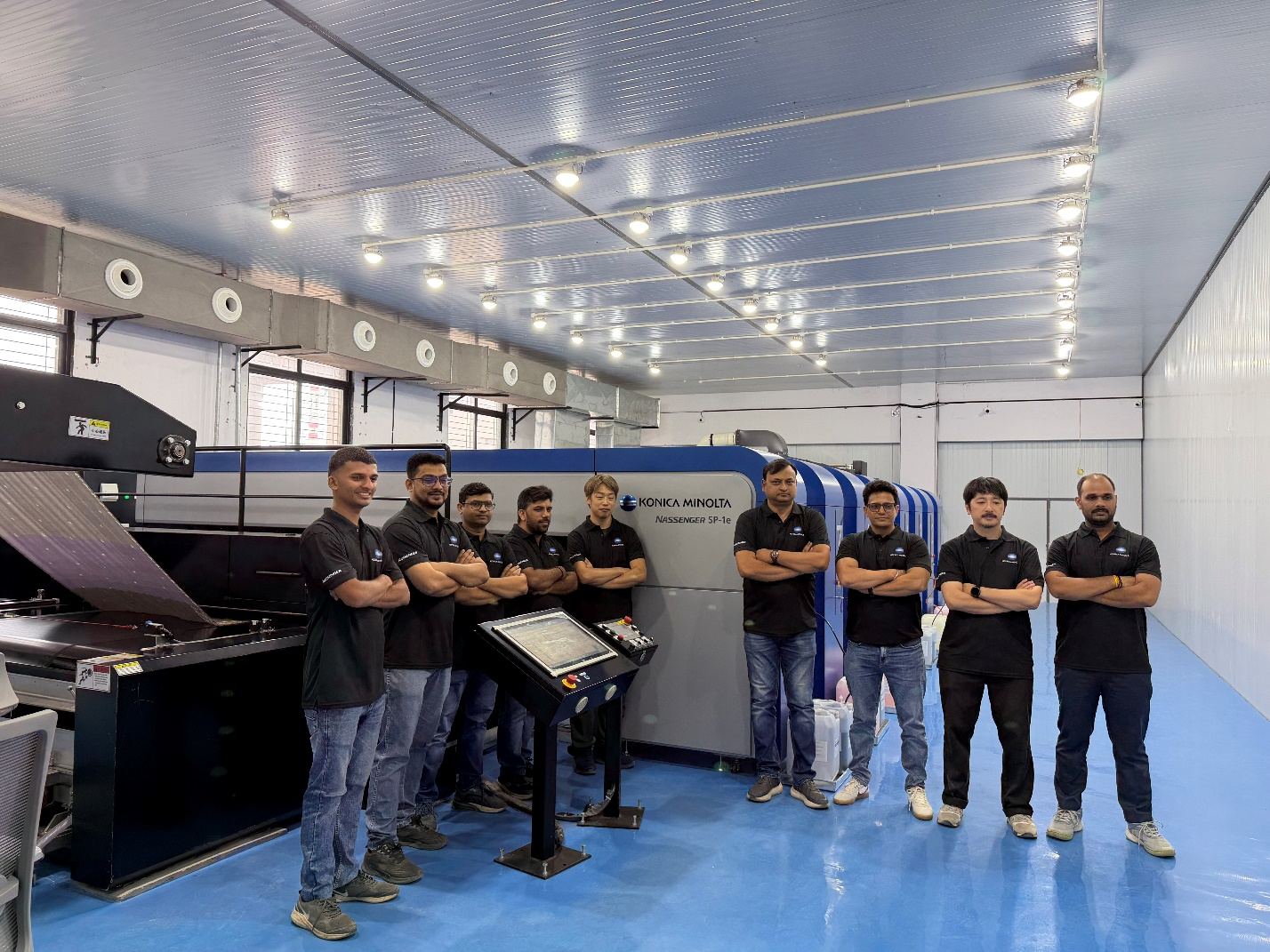
The NASSENGER SP-1e Digital Textile Printing Machine is designed for high-volume industrial production and delivers speeds of up to 6,400 sqm/hour.
Unlike multipass printers, where the print carriage repeatedly travels across the fabric, the SP-1e uses fixed printing units while the fabric continuously moves underneath.
This single-pass architecture enables extremely high production speeds and allows manufacturers to consider shifting long production runs from conventional printing towards digital.
Its significance is not only in speed, but in the combination of industrial productivity, digital flexibility, repeatability and Japanese engineering.
For export-focused mills, this can help create the ability to respond faster to international buyers while maintaining production at industrial scale.
NASSENGER 10e: Industrial Digital Productivity
The Konica Minolta NASSENGER 10e provides a strong bridge between flexible digital production and industrial-scale output.
With production speeds of up to 1,120 sqm/hour, depending on print mode and configuration, the machine is designed for manufacturers requiring high productivity while retaining multipass flexibility.
The NASSENGER 10e can be configured for Reactive, Disperse and Acid printing, allowing manufacturers to work across a wide range of natural, synthetic and specialised textile applications.
For exporters handling multiple fabrics, designs and order quantities, this flexibility can be a major advantage.
NASSENGER 8: Flexible Digital Textile Printing
The NASSENGER 8 Digital Textile Printer represents another important stage in the transition from conventional to digital textile manufacturing.
With production speeds of up to 380 sqm/hour, a printing width of approximately 1,850 mm and multiple production modes, it can support applications ranging from sampling and shorter runs to regular commercial production.
The platform can also be configured for Reactive, Disperse and Acid printing, giving manufacturers access to a broad range of textile applications from one digital technology ecosystem.
This makes NASSENGER 8 particularly relevant for manufacturers looking for flexibility, faster design changes and the ability to manage smaller and medium-volume orders efficiently.
Sustainability is Becoming a Competitive Advantage
The shift towards digital textile printing is closely linked with sustainability.
Conventional printing often involves physical screens, larger setup requirements and greater resource use during preparation and cleaning.
Digital textile printing can reduce several of these dependencies by enabling manufacturers to print closer to actual demand, eliminate physical screens and reduce unnecessary production.
As global brands increase their focus on wastewater reduction, chemical compliance, traceability and responsible manufacturing, sustainability is becoming more than an environmental issue.
It is becoming a business requirement.
India’s Next Textile Opportunity
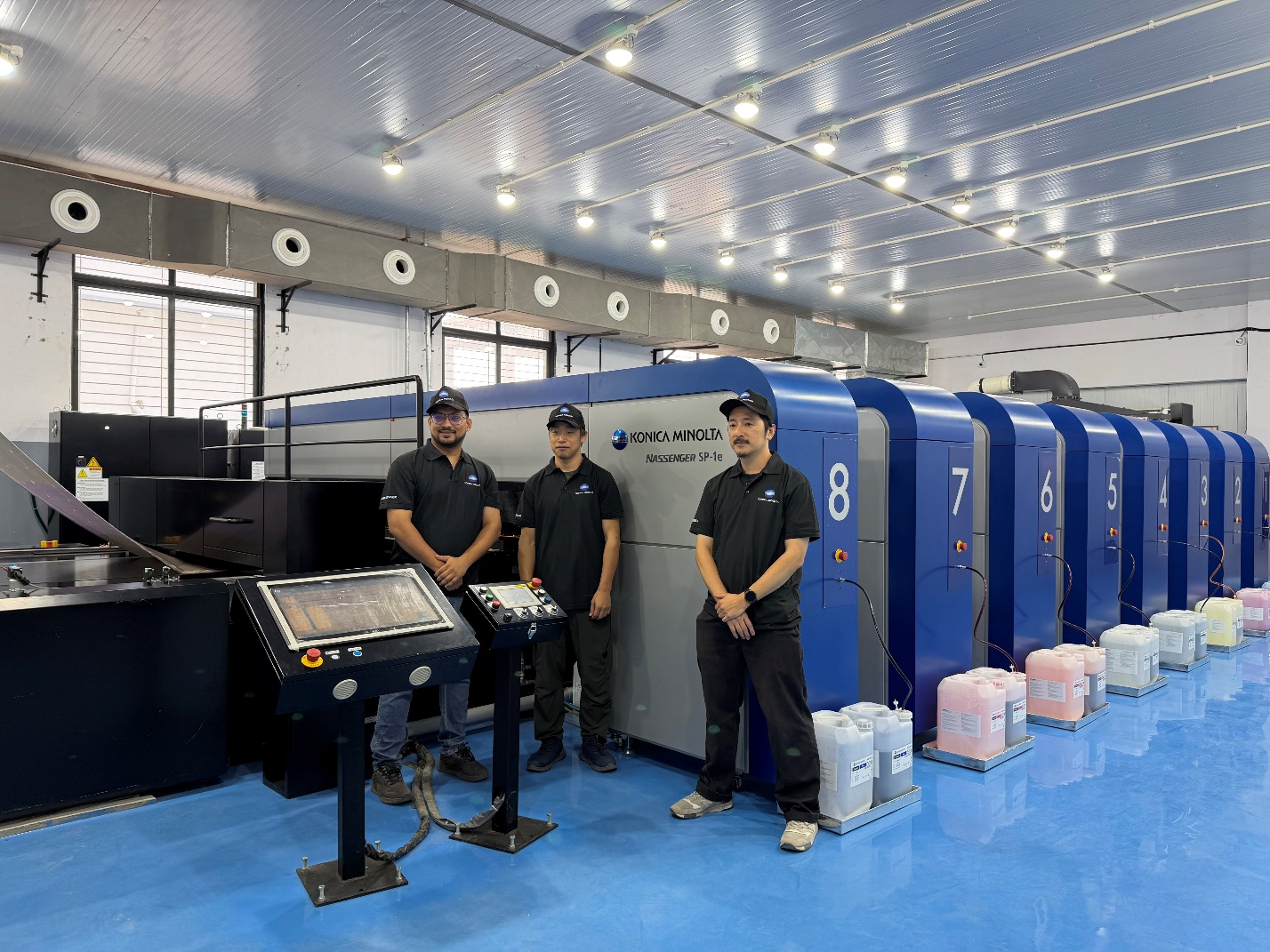
India’s textile opportunity is not simply about producing more.
It is about producing with greater value, flexibility, consistency and global competitiveness.
From the NASSENGER 8 at up to 380 sqm/hour, to the NASSENGER 10e at up to 1,120 sqm/hour, and finally the NASSENGER SP-1e at up to 6,400 sqm/hour, Konica Minolta provides a technology pathway for manufacturers at different stages of digital transformation.
The shift from conventional to digital has already started.
For Indian textile manufacturers, the real opportunity now is to use advanced Digital Textile Printer technology to scale production, improve sustainability, meet global standards and capture a larger share of the next generation of textile exports.