

 0
0 0
0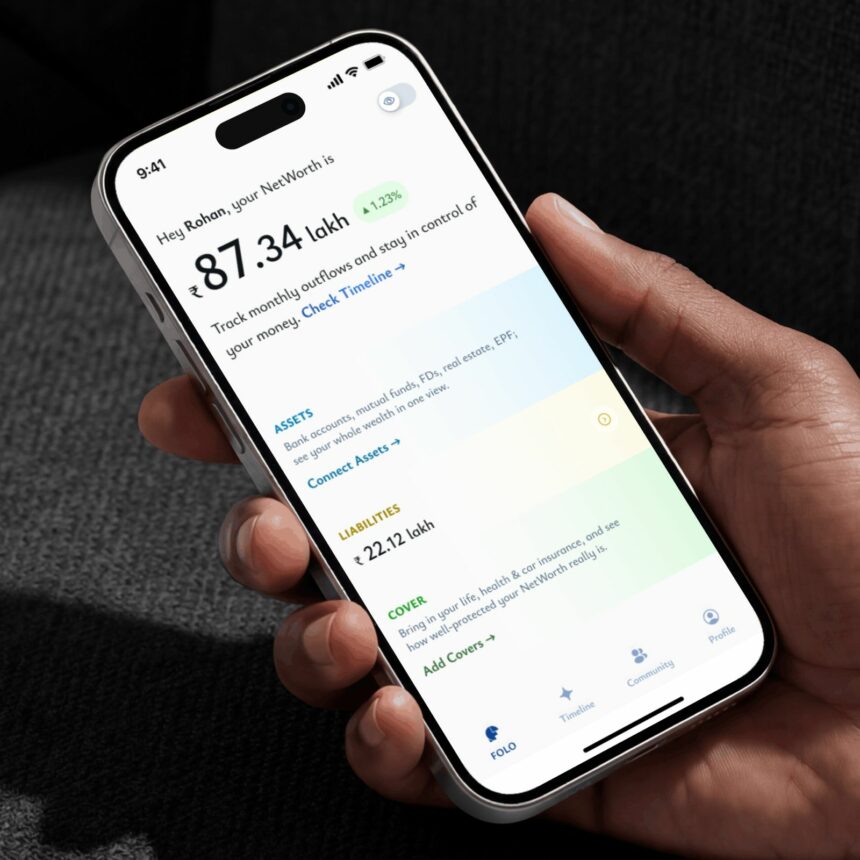
Mumbai/Bengaluru, August 26 (ANI): Ask most Indians what they earn, and the answer usually comes quickly. Ask what they are actually worth their total assets minus their total liabilities — and the response is often very different.
That is because income is relatively easy to track. Net worth is not.
A salary arrives in one account. Investments may sit across multiple platforms. An EPF account may be linked to a previous employer. Insurance policies may be buried in emails. Property and gold may exist outside the digital financial ecosystem, while home loans, personal loans and credit-card dues sit elsewhere.
The result is a surprisingly common financial blind spot: people know what they earn, but do not necessarily know what they own, what they owe, or how their overall financial position is changing.
Net worth is simply the value of everything a person or family owns minus everything they owe. In other words, Net Worth = Total Assets − Total Liabilities. Assets can include bank balances, mutual funds, stocks, EPF, NPS, property, gold, and other investments, while liabilities can include home loans, personal loans, vehicle loans, credit-card dues, and other outstanding borrowings.
Unlike income, which measures cash flow over a period of time, net worth measures financial position at a particular point in time. For that reason, it can provide a more complete picture of financial progress than income alone.
The challenge for many Indian households is not understanding the mathematics. It is getting all the information together.
An individual’s financial life can span multiple banks, investment platforms, insurers, employers and government-backed financial systems. Mutual funds may be held through different platforms, stocks through a separate broker, an EPF account may relate to a previous employer, insurance policies may sit unread in an inbox, and loans may be spread across different lenders. No single institution necessarily provides the complete picture.
Calculating net worth consequently becomes a manual exercise involving bank statements, investment statements, insurance documents, loan accounts and spreadsheets. For many people, it is something they attempt only when applying for a loan, preparing a net worth certificate, making a major investment decision or dealing with a significant life event.
Knowing the number, however, can influence everyday financial decisions.
Seeing total liabilities alongside total assets provides a clearer picture of debt exposure. Insurance planning becomes easier when a family can see the assets and liabilities it is actually trying to protect. Retirement planning also requires more than knowing monthly income; it requires understanding how much has already been accumulated across investments and retirement accounts.
There is also a less discussed reason to know one’s net worth: family preparedness.
Financial information is often distributed across different institutions and documents. If a family member becomes unavailable, the problem may not simply be accessing money. It may be discovering that particular accounts, investments, insurance policies or liabilities exist in the first place. A consolidated financial view can make this information easier for families to organise and share.
This is particularly relevant as Indian households become financially more complex. People change jobs, accumulate retirement benefits, buy multiple financial products, invest through different platforms and take on different forms of credit. The number of financial relationships a household maintains can grow even when the individual has not consciously created a system to manage them together.
The shift that technology can enable is from an annual financial check-up to continuous financial visibility.
Bank balances change, EMIs are repaid, investments rise and fall, insurance policies renew or lapse, and new assets are acquired. A net worth figure checked once a year can therefore become outdated quickly. Having a consolidated and regularly updated view can help individuals understand whether their overall financial position is improving, deteriorating or simply changing.
FOLO, built by Finuture Technologies, is a real-time net worth management app designed around this gap in financial visibility. It brings together information across categories including bank accounts, mutual funds, stocks, EPF, NPS, insurance, loans and credit cards across supported financial institutions, subject to user consent.
“Most people use multiple platforms to track their finances but still lack clarity,” said Munmun Desai, co-founder of FOLO. “The real challenge is not always earning more. It is understanding what you already own, what you owe and how your financial position is changing.”
The platform also includes an Account Health Score designed to identify gaps, such as incomplete financial information or missing nominee details. Its SHARE feature allows users to securely share their financial information with trusted family members without sharing banking credentials.
FOLO is currently used by more than a lakh families across India.
The platform connects with financial information through India’s Account Aggregator framework, which enables users to provide consent for financial information to be shared between participating institutions without giving an application their banking login credentials. Finuture Technologies is registered with SEBI as an Investment Adviser (INA000019521).
A consolidated financial view can also help when formal documentation is required. Individuals may need net worth information for certain loan applications, visa processes, government tenders and other financial or legal requirements. Having assets and liabilities organised in one place can make it easier to prepare the underlying information for such purposes.
But the bigger value of knowing net worth is not the certificate. It is the habit.
For years, the bank balance has been the number most people associate with their financial health. But a bank balance only tells one part of the story. A person can have a substantial balance while carrying significant debt, or have modest cash in the bank while holding considerable investments, property and retirement assets.
Net worth brings those pieces together.
As Indian families accumulate more investments, properties, insurance policies, retirement savings and credit facilities, knowing one’s net worth may become as routine as checking a bank balance.
The next evolution in personal finance may therefore not simply be about earning more or investing better. It may begin with something much simpler: knowing your number.
FOLO is available on the Google Play Store and Apple App Store.
About FOLO: FOLO (Family of Loved Ones) is a real-time net worth management app built by Finuture Technologies Private Limited, with operations in Mumbai and Bengaluru. The platform helps individuals and families organise and monitor their assets and liabilities in one place. Finuture Technologies is registered with SEBI as an Investment Adviser (INA000019521).